When knowledge is cheap, what is the inherent value of instinct?
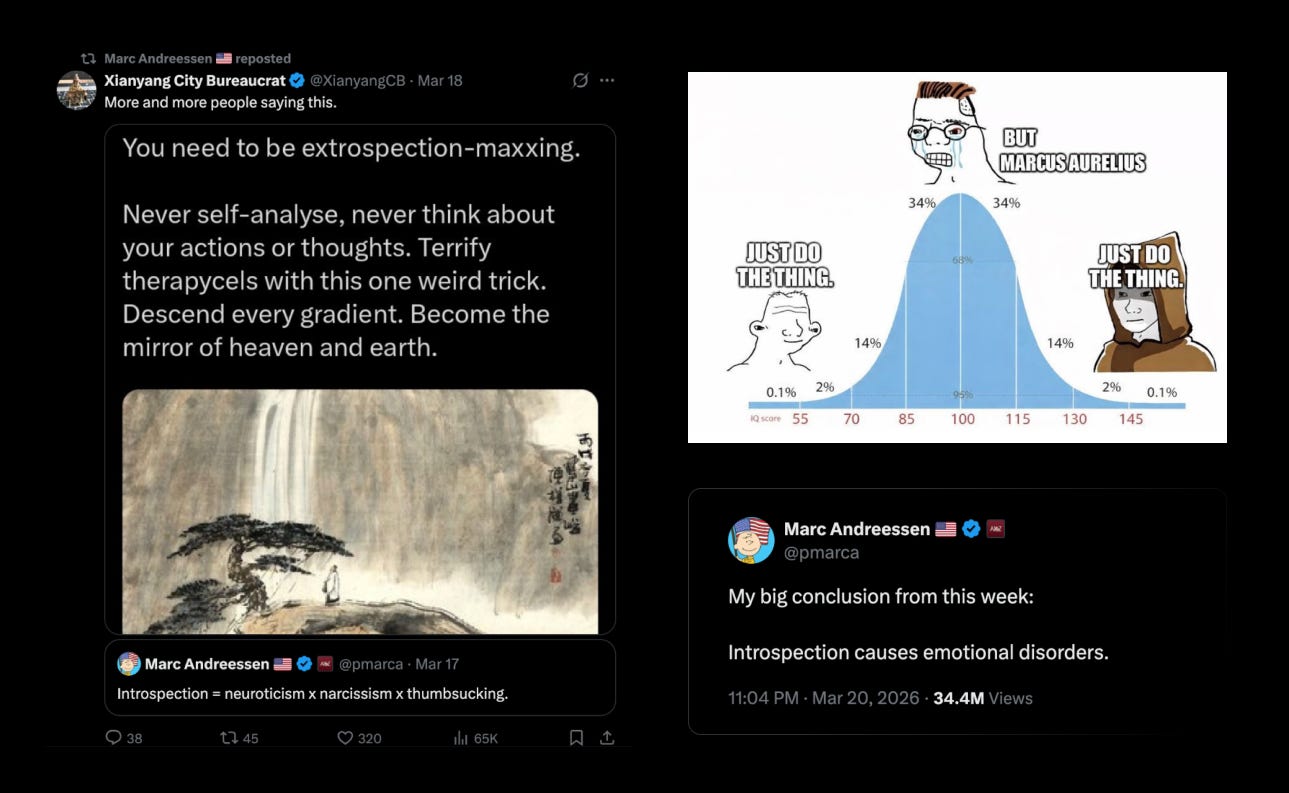
The term "r*tardmaxxing" was coined sometime between 2025 and 2026 across 4chan and Discord but has recently made headlines due to its current popularity on X. 2026 has been a strong year for the platform, as audiences — mostly young men — are flocking to it for its resemblance to the early internet: a petri dish where attention converges around a single dominant conversation, creating the illusion of a monoculture. These cycles are short-lived but concentrated, and as of late, much of that attention has centered on the manosphere.
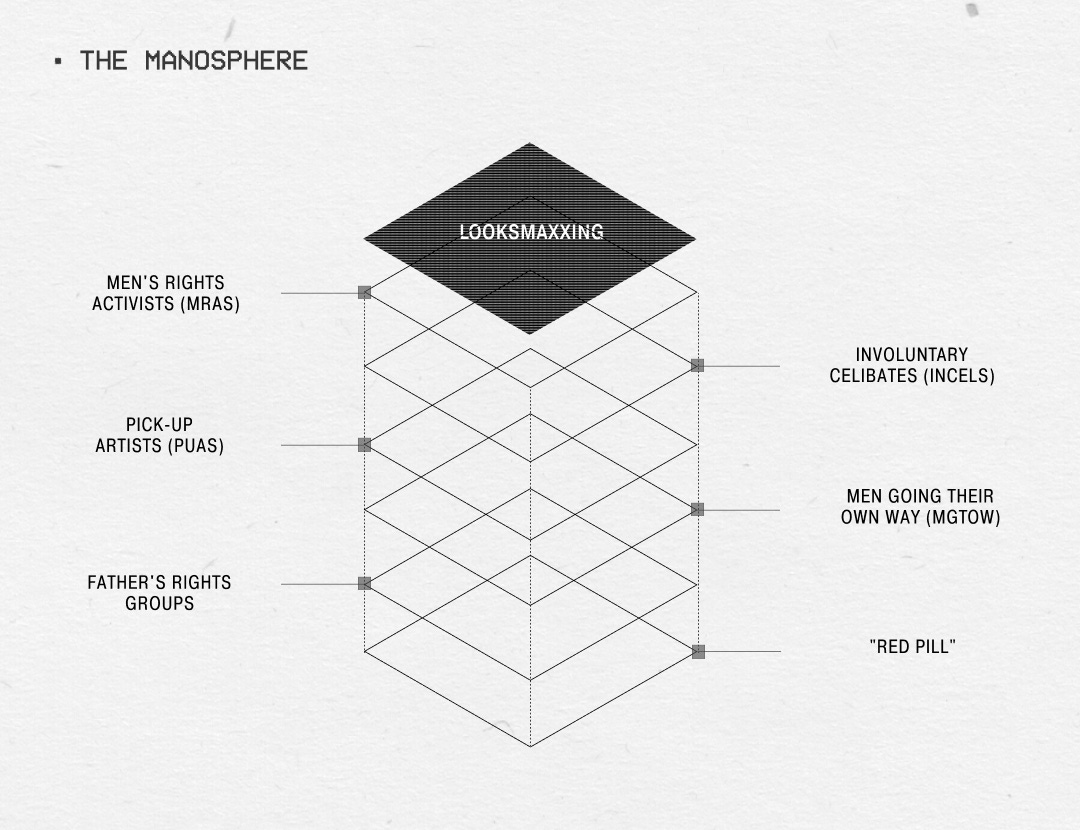
The manosphere is a loose network of online communities organized around male identity. The broad alignment point — whether incels, MRAs, MGTOW, or pickup artists — is a shared grievance: the belief that contemporary society privileges women and disadvantages men. The manosphere perceives this worldview as a profound awakening. Its "red-pilled" participants believe they see a hidden truth about gender dynamics that mainstream society denies or ignores.
Many of X's emergent behaviors trace back to this subculture. Terms like "mog" and "looksmaxx" originated within these communities and have since diffused into broader discourse. Its most recent iteration, "r*tardmaxxing," extends this logic from physical optimization to cognition — advocating for the minimization of introspection.
The Marc Andreessen Problem
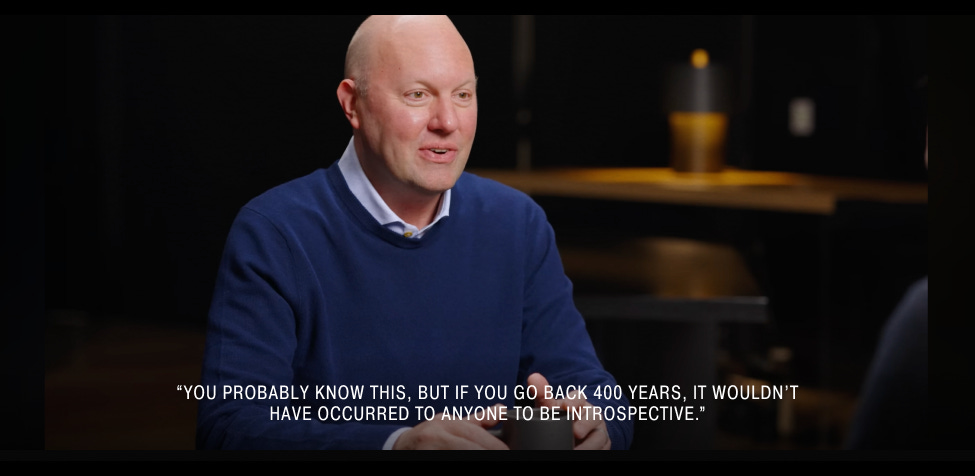
The conversation on X accelerated following a recent podcast appearance by Marc Andreessen, co-founder of Andreessen Horowitz, who stated that he engages in "zero" introspection and described self-examination as a relatively modern and unnecessary practice. The framing positions introspection as detrimental, and its reception suggests alignment with a broader shift toward action over reflection — seen in the inescapable obsession with "agency" and "being agentic" across tech-founder spaces online.
"You probably know this, but if you go back 400 years, it wouldn't have occurred to anyone to be introspective. Many of the modern conceptions around therapy and the things that result from it were essentially manufactured in the 1910s or 1920s — great men of history didn't sit around doing this. At any prior point." — Marc Andreessen
X immediately responded with a mix of outrage and support.
A History of Turning Inward
Across both Western and Eastern traditions, the practice of introspection can be traced to the earliest philosophical systems concerned with how a person governs themselves.
In the West, figures like Plato, Seneca, and Marcus Aurelius formalized introspection as a response to instability. In the East, parallel traditions in early Buddhism and Confucianism emphasized inward examination as a means of achieving ethical alignment. This impulse toward self-governance emerged during periods of expansion, when individuals were increasingly forced to understand their role within larger political and social systems.
If the individual cannot understand a volatile external world, they must cultivate a sense of understanding of the self. In Apology, Plato asserts that "the unexamined life is not worth living." Stoics extend this into daily practice; in Meditations, Marcus Aurelius writes: "You have power over your mind — not outside events. Realize this, and you will find strength."
The shared theme is that if not deliberately attended to and disciplined, the self is vulnerable and reactive — more easily controlled by external forces.
In 1632, Blaise Pascal was writing shortly after the Thirty Years' War, when Europe was in chaos and Christians were killing each other over small differences in their beliefs. Such external catastrophe inspired his most famous sentiment:
"All of humanity's problems stem from man's inability to sit quietly in a room alone… Solitude is the furnace of transformation. Without solitude, we remain victims of our society and continue to be entangled in the illusions of the false self."
In the 1840s, Søren Kierkegaard described in The Sickness Unto Death different forms of despair found in the modern age. The most common kind was despair in ignorance of itself — a person trapped, having lost themselves, yet unaware that there was a self to lose in the first place.
"Most men live without ever becoming conscious of being destined as spirit. There is so much talk about wasting a life, but only that person's life was wasted who went on living so deceived by life's joys or its sorrows that he never became decisively and eternally conscious as spirit, as self."
The Narcissistic Self
Preoccupations of the self — and the loss of this self — continued into the 20th century. Christopher Lasch argued that with the advent of modernity also came a new type of person. Work moved from small ecosystems into global corporate conglomerates. Authority shifted from localized individuals to decentralized systems. The individual lost autonomy and independence, and with them the ability to measure themselves against real, present figures of authority.
This creates a pathological dependence — both materially and psychologically. "Having surrendered most of his technical skills to the corporation, the contemporary American can no longer provide for his material needs," Lasch recounts in The Culture of Narcissism. "The atrophy of older traditions of self-help has eroded everyday competence… and has made the individual dependent on the state, the corporation, and other bureaucracies."
This dependence shapes the self. Instead of being grounded internally, people look outward for validation: "The narcissist depends on others to validate his self-esteem… He cannot live without an admiring audience."
The self is not formed through introspection or experience but through patterns of consumption. Identity is externalized.
What Maxxing Really Is
What does this have to do with the cultures of maxxing, acting, and doing? They all reject introspection.
Despite its origins and its controversies, the maxxing community is no longer fringe. This year, Clavicular — a prominent figure within the community, known for his extreme aesthetic interventions such as "bone smashing" — walked the runway at New York Fashion Week.
For looksmaxxers, value is determined solely by one's physical appearance. The body is a tool to be controlled. "You can't negotiate attraction," they claim. It's an explicit edge in a world where advantages are increasingly difficult to obtain.
With the democratization and mass consumer adoption of AI, knowledge has become a commodity. Every answer is a prompt away.
If that is the case, then what is the value of individual expertise? What is the benefit of knowing oneself? If my self is not commodified or validated online, does it even exist?
The Why We've Lost
The reason that knowing has been so important throughout history is that it generated meaning. It cultivates a nearly sacred relationship between the self and the external world. Through inner contemplation, we escape the noise of a chaotic and ever-shifting value system and generate an individual point of view that is not contaminated by industrialized knowledge.
Without this space of separation — of internalized authority — a sense of self is impossible to cultivate to the point where it cannot rise above our present conditions. We are under constant surveillance and overexposure, and the only solution we are offered is consumption. The "self" flattens into an indefinable and volatile stream and becomes another commodity that does not exist without external validation.
This profound alienation is a symptom of a new kind of distinctly American sickness. Somewhere along the way, we lost our provocateurs, our stories, and our myths. We have lost our why. Rather than find the answer, it is easier — and more profitable — to check out, r*t*rdmaxx, work harder, earn more, get hotter, focus on the imminent, because we are incapable of looking within. None of this saves us. It only gives the illusion of control in a world shaped by AI uncertainty, inflation, and the threat of nuclear war.
We are measuring not what matters but what performs, and are wondering why we are exhausted.
A need to scale knowledge gave us the printing press. A need to expand territory gave us the compass. A need to survive disease gave us vaccines. A need to communicate at a distance gave us the telegraph, then the internet.
Each breakthrough is anchored in a clear human need. What is the human need of our current moment? And what does it mean if it's not a human need at all?
A strong why can withstand any how. The counterweight is a defined why that holds across your brand, your company, your processes, and your creative work. This requires introspection. Without it, there is no mechanism to form an independent standard. Establish it internally through deliberate reflection. What you believe. What you are building toward. What actually matters.
Because if you don't decide what matters, the world we're living in will decide for you.


